
Top 6 Best Substack Alternatives in 2026
6 alternatives to Substack for creating a publication and earning from paid newsletters.


Substack helped many writers start paid newsletters, but more and more writers are now looking for Substack alternatives that offer them better, fairer fees, more control over who sees their posts, and a place that doesn’t feel like every other social media platform.
If you are looking for an alternative to Substack, you are probably comparing platforms and thinking about what works best for your goals. Not all newsletter platforms are the same, and choosing the right platform for your newsletters can affect how you grow your list, earn from your publication, and manage your audience.
This guide explains why writers are leaving Substack and breaks down the best Substack alternatives for paid newsletters available today.
Why writers are leaving Substack for other platforms
Substack played a key role in the newsletter boom, but several issues are now pushing creators to look for alternatives to Substack. The main reasons include the 10% flat fee that Substack takes from all subscriptions, the platform's shift toward a social media-like feed, algorithmic changes causing limited control over distribution, and concerns around moderation, especially surrounding hate speech.
1. The 10% fee makes Substack alternatives more appealing
Substack takes a 10% cut of all paid subscriptions, plus Stripe processing fees. When your newsletter is small, this may not seem important, but as your audience grows, the cost adds up.
Many writers look for alternatives to publish their newsletter that use flat monthly pricing or lower percentages of revenue shares. That way, they can keep more of their income instead of losing a percentage on every payment.
For creators with hundreds or thousands of subscribers, switching to a Substack alternative can make a big difference financially.
2. Substack is becoming more like social media
Substack has introduced many features in the past few years that make the platform feel just like any other social media platform. Feeds for Twitter-like Notes, recommendations, and algorithm-based discovery have turned Substack into something that makes it harder for many writers to grow on the platform, taking away from the original appeal of the space.
Although some creators benefit from the feed, others feel that they have to compete for attention with rage content, and they joined Substack to avoid social media-like features.
3. You do not fully control distribution
Substack lets you export your email list, which means you technically own your subscribers and you can move your list to another platform easily. However, within the platform, your reach and visibility are still influenced by algorithms and you cannot fully control who sees your posts.
Many creators are looking for a platform where distribution is more direct and predictable, and this is why they are switching to a Substack alternative.
4. Ongoing concerns about moderation
Substack has faced criticism in recent years for its approach to moderating (or not moderating) harmful or extremist content. Some controversial publications that spread hate speech have remained active and monetized on the platform.
This has led many writers on Substack to consider switching to platforms that offer a different environment and clear standards of moderation.
The best Substack alternatives
This next section will show you a list of the best alternative publishing platforms for paid newsletters.
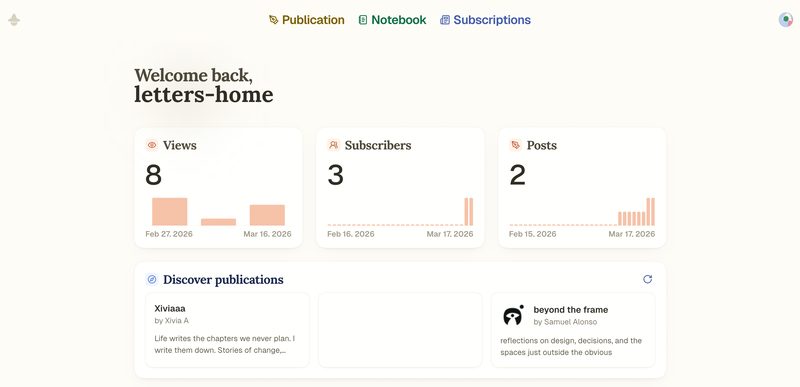
1. Fika: SEO-friendly Substack alternative for international audiences
Fika is made primarily with international audiences in mind and designed as an algorithm-free, creator-first platform for newsletters and blogs. It focuses on giving writers control over their content while avoiding social feed distractions.
Fika Features
Fika includes an easy-to-use editor, built-in email delivery, and a customizable publication space. It gives you free tools for proofreading and automatic translation, allowing you to publish in multiple languages and reach a wider audience.
Unlike many Substack alternatives, Fika is built with SEO in mind. Your posts are structured to rank in search engines, giving you a steady growth channel outside platform algorithms. It also includes analytics and tools for quick and easy social sharing.
Fika is completely free to start and built to help you grow. Create a content calendar, start publishing your newsletters, and share your publication to grow.
Pricing
Fika is free to start and only charges once you begin earning revenue, similarly to Substack. However, instead of Substack’s 10% rate, Fika uses a sliding scale from 10%–7%, so you keep more of your income as you grow. Stripe Connect fees also apply.
2. Beehiiv
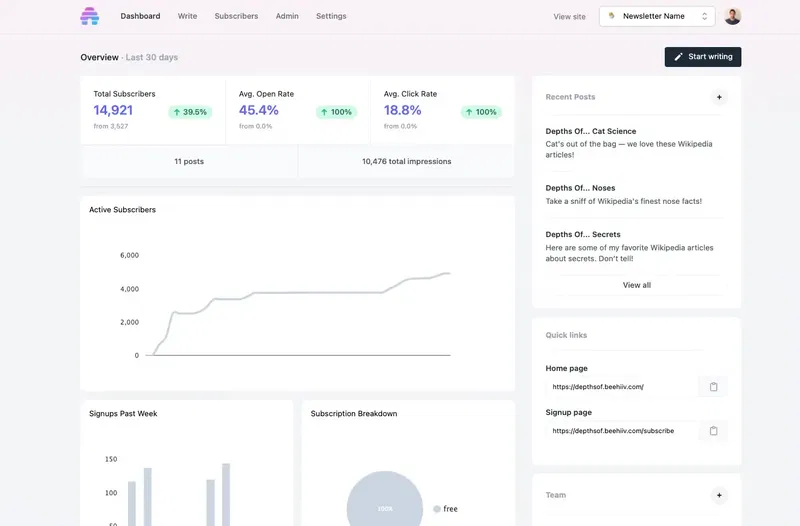
Beehiiv is a Substack alternative designed for creators who want to scale their business quickly and optimize the performance of their newsletter.
Features
Beehiiv offers referral programs to drive subscriber growth and an ad network for early monetization. It also provides advanced analytics, showing where subscribers come from and how they engage with your content.
You can use custom domains and segmentation tools, and compared to other Substack alternatives, Beehiiv stands out for a focus on growth and monetization.
Pricing
Beehiiv has a free plan for up to 2,500 subscribers. Paid plans give you more features, including automation and segmentation. Beehiiv has monthly fees depending on your plan and the number of your subscribers.
3. Ghost: a Substack alternative with full control

Ghost is a Substack alternative for writers who want full ownership of their platform. It combines a website, newsletter, and membership system.
Features
You host your content on your own domain and control everything from the design and structure to the user experience. Ghost includes built-in email marketing tools, memberships, and custom themes.
Pricing
Ghost charges a flat monthly price starting at around $15 per month. It doesn’t take a percentage of your subscription revenue, which makes it better than Substack for larger newsletters.
4. ConvertKit/Kit: a marketing-focused Substack alternative

Kit (previously ConvertKit) is a Substack alternative that is designed for creators who need more advanced email marketing tools.
Features
Kit is a platform that includes tools for segmentation, and automation and is a bit more advanced, perfect for people who are more into email marketing. You can build email sequences with targeted messaging to create funnels for your business with Kit.
Kit also lets you set up landing pages and gives you ways to sell digital products as well. Compared to other Substack alternatives, it is more focused on marketing than publishing.
Pricing
Kit has a free plan for smaller lists, and paid plans depend on subscriber count. They start at around $33 per month. There are no fees on your sales.
5. Buttondown
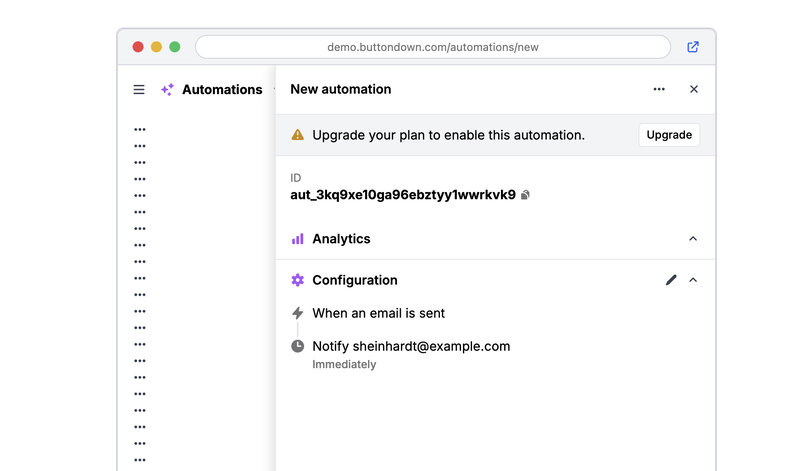
Buttondown is a simple Substack alternative for writers who want a minimalist tool.
Features
Buttondown gives you an easy-to-use editor, a way to manage subscribers, and email delivery without many extra features. Buttondown lets you run more than one newsletter and use custom domains.
Pricing
Buttondown starts at $9/month, with separate pricing for all add-ons like segmentation, surveys, and multiple newsletters.
6. Patreon: alternative for monetization
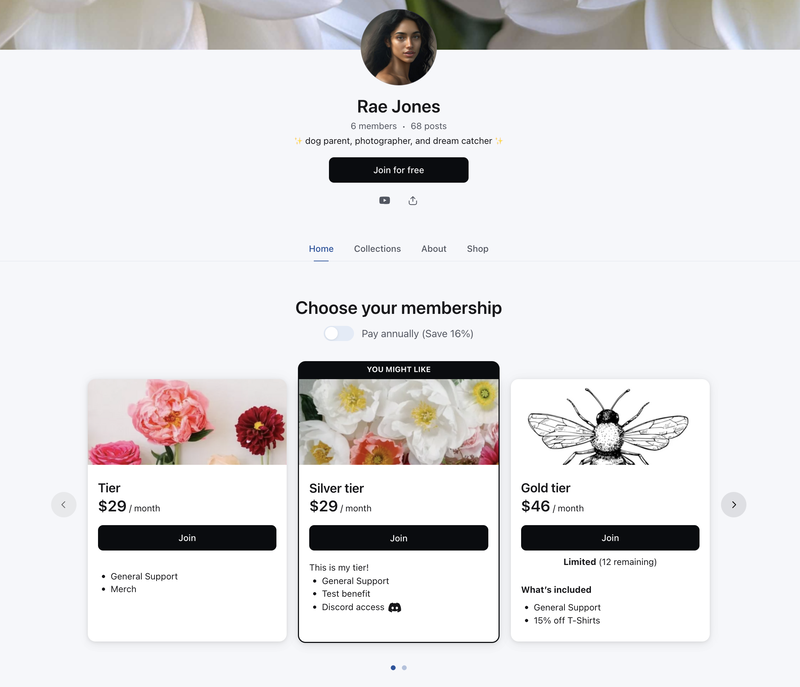
Patreon is often used as a Substack alternative for monetization, but it won’t help you with publishing. An optional route you can take is using several tools at once: one for publishing your newsletters and Patreon for monetization.
Features
Patreon allows you to offer tiers for memberships and exclusive content to get support from your audience. Many people combine Patreon with another tool for email delivery.
Pricing
Free to set up but charge fees between 5% and 12%, depending on the plan and number of supporters, plus processing fees.
How to choose the right Substack alternative
There is no single best alternative for Substack that will match the needs of every writer, but the right choice depends on how you want your work to look like, what features you need the most, and what you want to avoid.
If you are looking for a Substack alternative that is similar to Substack, but is built more around creators, Fika is one of your best options. It keeps the writing and publishing experience simple, but removes the social media feed aspects of the platform and doesn’t force you to rely on an algorithm.
What sets Fika apart is that it is designed for an international audience, and the built-in free autotranslation tools help you reach a wider audience by publishing in multiple languages automatically.
Other Substack alternatives may make more sense if you have different needs. If you are comfortable with more technical setup and want full control, Ghost may be a better fit. If your focus is email marketing and funnels, Kit is likely the Substack alternative you should try.

Comments
No comments yet. Be the first to comment!