
Best Medium Alternatives in 2026
A list of alternatives to Medium for writers looking for a new platform to write, grow, and publish online.


Medium is a writing platform that helped many writers find their voice and earn money online, but more and more writers are now searching for alternatives to Medium for one reason or another. If you are also one of these writers comparing options, this guide is for you. It breaks down the best alternatives to Medium available in 2026 and gives you an overview of the main features and pricing model of each platform.
Why writers are looking for Medium alternatives
Twitter co-founder Ev Williams launched Medium in 2012 as a platform for long-form writing, and for many years, it delivered on its promise and rose in popularity. Writers could publish their work, build an audience, and earn money through the Medium Partner Program, which pays writers based on how much time paying members spend reading their articles.
But the platform has changed quite a bit in recent years. For many writers, the negative effects of these changes are hard to ignore. Not to mention that new writers on Medium say they have a hard time on the path to monetizing their content on the platform. This leads many writers to look for a new place to write online, which leads them to articles like the one you are currently reading. Let’s look at all the reasons writers look for alternatives to Medium and see if any of them check the boxes you need in the next home you settle on for your writing.
If you already know why you are looking for a Medium alternative, skip ahead to the list in the next section.
1. Earning on Medium
One of the biggest reasons writers are leaving Medium is money, that is the amount of money they can potentially make by writing on Medium. Many writers who were earning hundreds of dollars per month feel their earnings have dropped sharply, even when publishing at the same pace.
Medium changed its Partner Program several times throughout 2025 and into early 2026. This changed how its “Boost” feature and external traffic factor into the payouts that writers on the platform receive.
While some changes aimed to crack down on spam on Medium and reward quality writing, many legitimate writers found themselves earning far less for the same effort as before the changes.
2. The paywall limits your reach
Medium has a paywall, meaning readers who are not paying members can only access a limited number of articles per month for free. For new writers trying to build an audience, this can be a huge barrier. The question that writers must ask themselves: how will my readers discover me? Organic growth is much harder when most readers hit a wall before finishing your article.
For this reason, many writers are seeking Medium alternatives with a different approach to reach and visibility, for example, letting writers decide what content to share for free and what to paywall.
3. You do not own your relationship with readers
On Medium, the content you create lives on the domain of Medium. You do not build an independent email list that you control. Even your visibility within the platform is shaped by Medium's algorithm and curation decisions. Writers who want a direct relationship with their audience and to rely on their work reaching readers without algorithm interference often find Medium limiting for these reasons.
4. Unpredictable algorithms
For writers who want to understand how their work will perform and who it will reach, Medium’s system for distributing and boosting articles can be confusing and frustrating. For example, the Boost program gives certain articles higher visibility by a significant amount. This can lead to higher earnings, but even those who use it have little clarity on how it works exactly.
The best Medium alternatives in 2026
Now that you have a clear picture of why writers are looking for a platform other than Medium to write and publish on, let’s take a look at a list of ten platforms you should try.
1. Fika: SEO-friendly Medium alternative for international writers
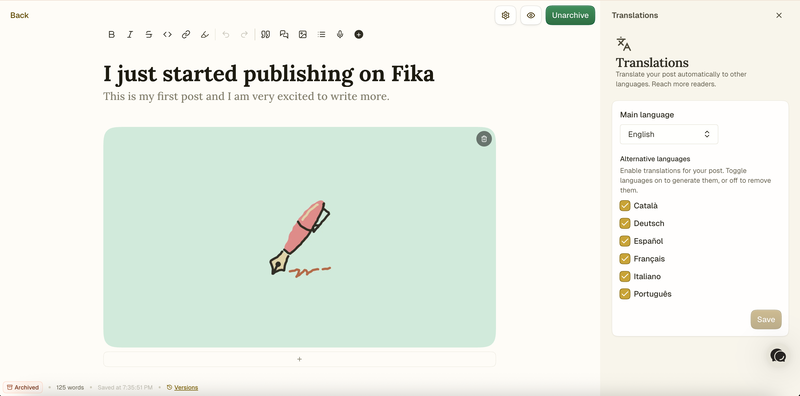
Fika is a free publishing platform for blogs and newsletters that is a great alternative to Medium. It is built in Europe with an international audience in mind. It is completely free to use, free of algorithms, and designed to also be free of distractions.
Fika is designed to help writers grow independently, without relying on an internal algorithm. The platform is built to be 100% SEO-friendly. It gives users many tools to distribute newsletters and blog posts with global reach in mind thanks to built-in translation features.
Features
Fika gives you everything to publish and grow on the day you start, all for free:
Your personalized subdomain
A minimalistic editor that helps you focus on writing
Built-in email newsletter delivery to subscribers
Unlimited subscribers, image storage, and translations
Unlimited proofreading requests to polish your writing
Analytics and social media sharing tools
Import/export contact features so you can migrate your audience from other platforms
Branding options including logo, header, and custom header/footer snippets
Paid subscription tiers to offer readers ways to support you
Forms and lead magnets that help you grow your mailing list
One of the main features that sets Fika apart from competitors is that you can automatically translate your articles to reach more people. This means that you can draft a post in your own language and instantly pubish it for readers in their own language, allowing you to reach many other readers you wouldn’t be able to otherwise due to language barriers.
Fika was also built with SEO in mind from the start, so your posts are structured to rank in search engines. This gives you a steady source of organic traffic that does not depend on any platform algorithm, as long as you pay attention to following a few SEO best practices.
Unlike Medium, where discovery happens inside its walls, Fika helps your writing get found from the outside, from other sources.
Pricing
Fika is free to start. The platform only charges a fee when you start earning from paid subscribers. Fika's fees work on a sliding scale of 10%–7%, meaning that the more subscribers you have, the more you keep of what you earn. Use this calculator to calculate roughly how much you can earn from Fika.
2. Substack: newsletter-first publishing and social media platform
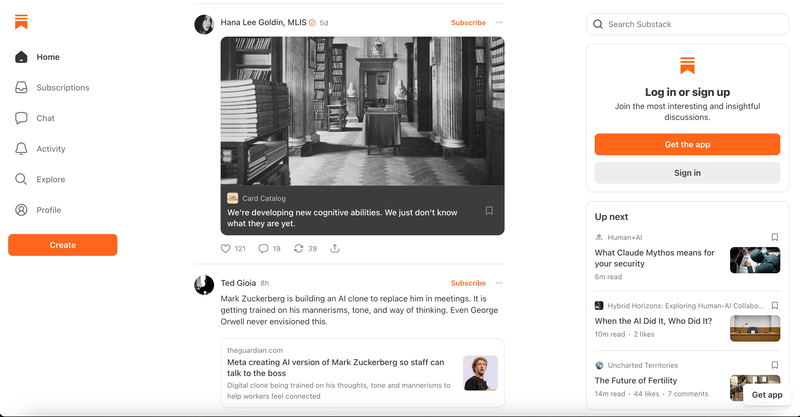
Substack is a well-known platform and Medium alternative for writers who want to create paid newsletters. It combines publishing, email delivery, and a growing network of readers and creators in one place that reminds some people of every other social media platform.
Features
Substack lets you publish posts, send them as newsletters to subscribers, and charge them for access with different subscription tiers, similarly to Fika.
The platform includes a “recommendation network” that can help you grow by letting you appear in front of other Substack readers, but it is based on an algorithm, which can be unpredictable and change often.
You get a publication page that you can customize, and you can export your email list if you want to move to another platform.
Pricing
Substack is free to use. The platform only takes a 10% cut after you start earning from subscriptions, plus Stripe processing fees.
3. Ghost: full ownership and control over your publication
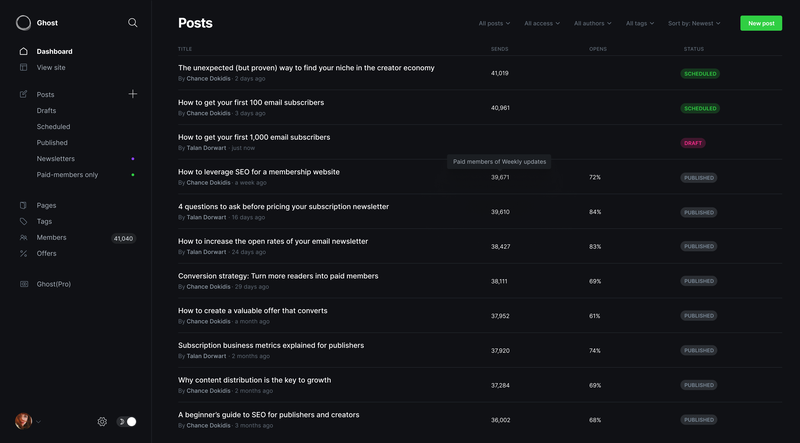
Ghost is a good alternative to Medium for writers who want complete control over their platform. It combines a website, a blog, and a newsletter in one tool.
Features
Ghost gives you your own domain, custom themes, built-in email marketing, membership tiers, and a simple writing interface. It lets you publish both free and paid content, and gives you complete control over how you want to present your publication.
Pricing
Ghost offers “managed hosting” between $15–$199/month, depending on the features that you need. Ghost takes 0% of what you make from your subscriptions.
4. Beehiiv: growth-focused Medium alternative
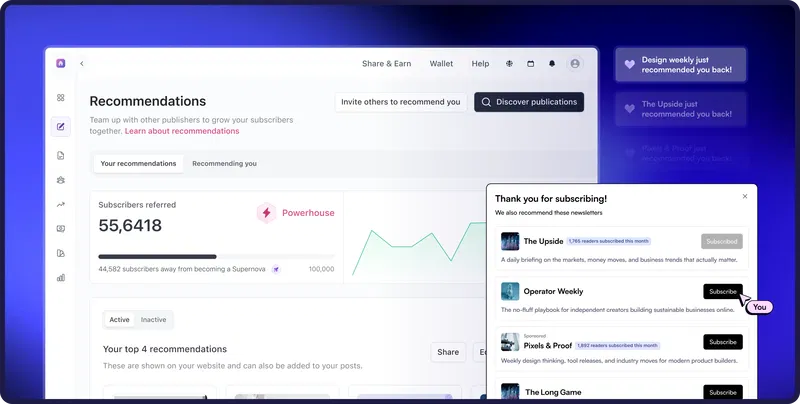
Beehiiv is a Medium alternative built specifically for newsletter creators who want to scale fast. It suits writers focused on monetization and audience growth from day one.
Features
Beehiiv has many ways to monetize your writing as well as many email anayltics tools.
The platform includes referral programs and A/B testing tools for subject lines, as well as analytics, email automations, and a network for cross-promotion with the newsletters of other users.
In exchange for a fixed monthly fee, the platform charges 0% commission on all subscriptions.
Pricing
Beehiiv has many different packages you can choose from. The Launch plan is free up to 2,500 subscribers. The Scale plan starts at $43/month and gives you access to ad monetization, the referral program, and paid subscriptions. The Max plan starts at $96/month and adds white-label branding and access to monetization through sponsorships.
5. WordPress: the biggest alternative to Medium
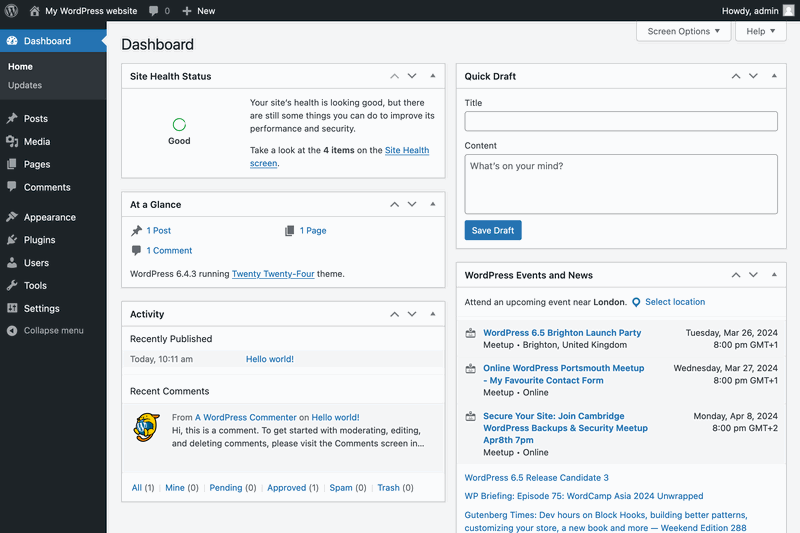
WordPress is one of the biggest blogging platforms and probaly one of the most established alternatives to Medium for writers who want as much flexibility as they can get and long-term ownership of their content and audience. Wordpress powers a very large portion of the web and offers a way to publish that fits all sorts of writers and can grow with any type of writing project.
Features
You can create anything with WordPress from a simple personal blog to a full editorial publication. It includes SEO tools, analytics, e-commerce, content scheduling, newsletter publishing, and subscriber-only content, and much more.
Pricing
WordPress has a free plan that includes basic features. Paid plans start at a few dollars per month. These offer more storage, custom domains, and all sorts of more advanced tools as the price goes up.
6. Vocal: Medium alternative with built-in monetization from views
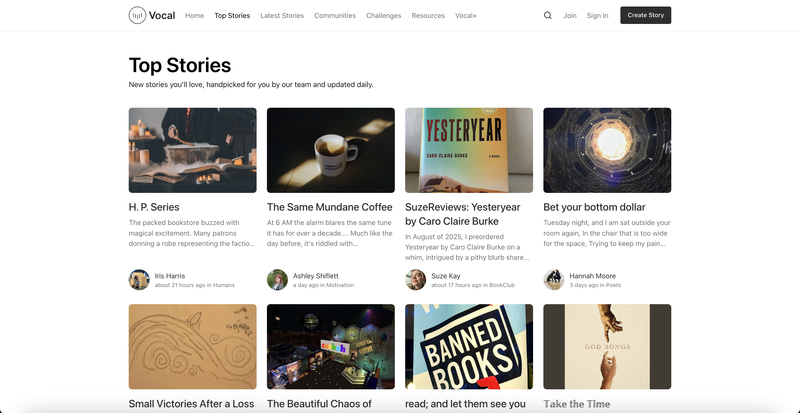
Vocal is an open publishing platform that lets writers earn money directly from reads, making it one of the closest alternatives to Medium's Partner Program.
Features
The community of Vocal is organized around different topics covering everything from tech and travel to fiction and wellness. Writers can earn money on the platform based on how many people read their work, and readers can also leave tips as an alternative way to support writers. You own your content and can post articles across multiple niches without creating separate accounts.
Pricing
Vocal is free to join. Free members earn a rate of $3.80 per 1,000 reads. When you upgrade to the $9.99/month paid plan it raises your earnings rate to $6.00 per 1,000 reads.
7. Hashnode: Medium alternative for devs and tech writers
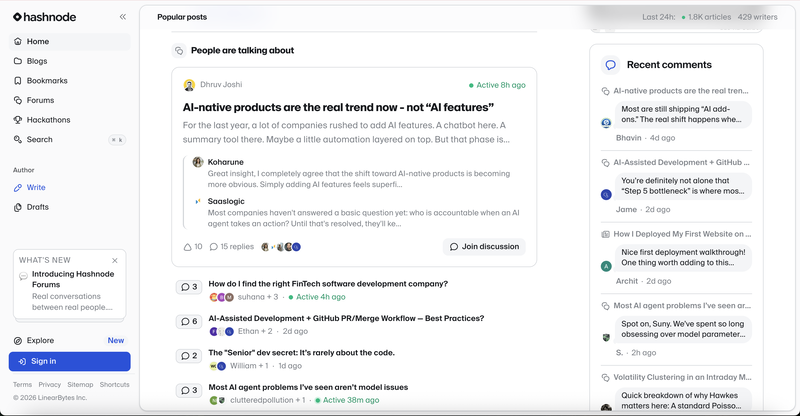
Hashnode is a publishing platform specifically for the developer and tech writing community. If you write about software, coding, or technology, it is a Medium alternative worth checking out.
Features
Hashnode gives you a personal blog on a custom domain, an AI-assisted writing editor, a block-based WYSIWYG Markdown editor, and a way to collaborate on writing and editing with a team. It also supports headless CMS capabilities so you can integrate your blog into your existing website. Posts can rank well in search engines thanks to the platforms focus on SEO-friendliness, and the platform has a community of developers who may discover your writing organically.
Pricing
Hashnode has a free plan. If you need features like team management and premium support, there are enterprise plans available for larger organizations.
8. Write.as: minimalistic Medium alternative
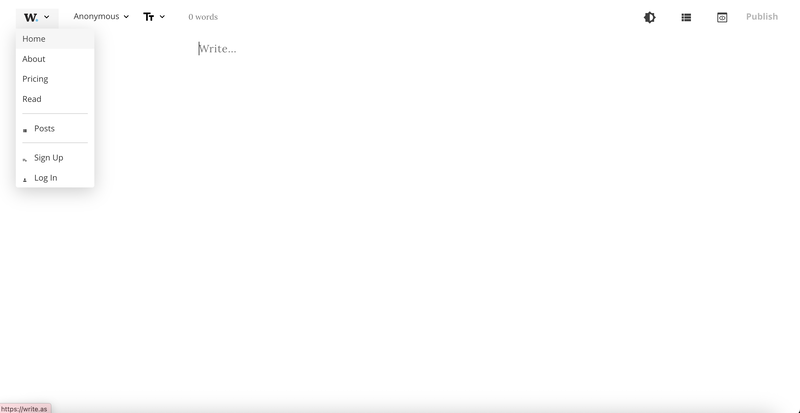
Write.as is a really simple publishing platform for writers who want to publish quickly without doing any sort of setup. It is built around an open-source blogging engine called WriteFreely.
Features
Write.as lets you publish anonymously and create multiple blogs from one account. It has a clean minimalistic editor, custom domains, and lets you send newsletters by email. It connects to the Fediverse via ActivityPub, meaning posts can reach readers on decentralized platforms. There are no ads and no algorithmic feeds.
Pricing
Write.as has a free plan that includes only the text editor with its own branding. Paid plans start at $9/month and include more of the featues discussed above like custom themes, newsletters, photo hosting, and being able to create up to three blogs.
9. Kit: Medium alternative with email marketing for writers
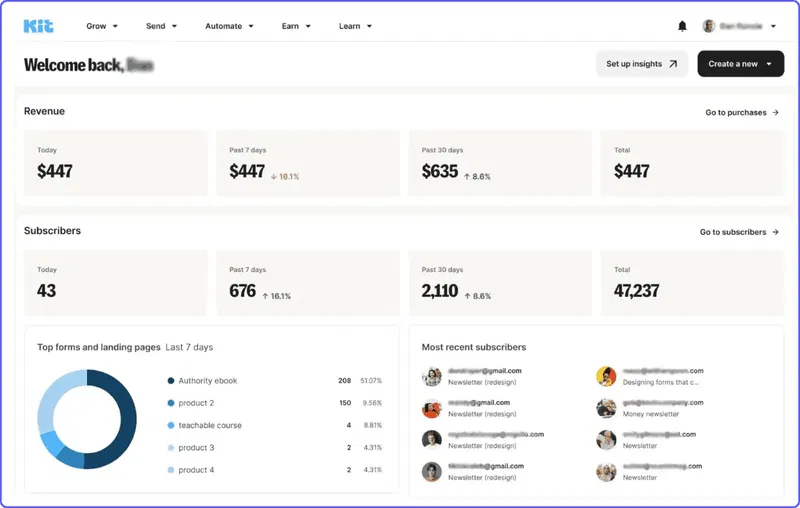
Kit, which used to be ConvertKit, is a Medium alternative for writers who view their work as a business. The focus of this platform is on email marketing, audience segmentation, and sales funnels rather than on blogging and building a personal relationship with readers.
Features
Kit has many tools for building email sequences, segmenting your audience, setting up landing pages, and selling digital products. It is more of an email marketing platform than a blogging tool for creative writing, but many writers use it to create a newsletter business that is independent from other platforms like Medium or Substack. There are no fees that Kit takes on subscriptions and sales.
Pricing
Kit has a free plan for smaller lists. Paid plans start around $33/month and go up based on subscriber count.
10. Dev.to: open-source community for tech writers
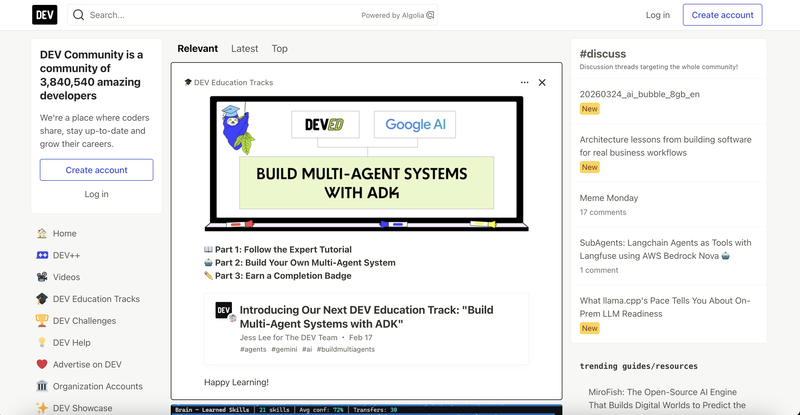
Dev.to is a free, open publishing community for developers and tech writers, primarily. It is a good Medium alternative for those who want to write for a technical audience without worrying about upfront monetization.
Features
Dev.to is built with a simple layout for a quick and easy writing experience. It is also free and built with SEO in mind and supports canonical URLs so you can cross-post from your own website without worrying about hurting your search rankings.
Pricing
Dev.to is free to use.
How to choose the right Medium alternative
The right platform depends on what your writing goals are and what you are trying to build. If you are looking for a platform that is free and want to get start writing on as soon as possible, the best thing you can do is test a few options.
Fika is completely free. You can create an account in 2 clicks and check out the platform for yourself. Taking a look at the tools first-hand will help you understand how Fika helps you grow an international audience through SEO and translation tools. You will see how the platform works as a combination of SEO, email newsletters, automatic translation, and audience ownership, all for free, built for writers who want to grow without relying on an algorithm.
Whatever platform you choose, the most important thing you should focus on is producing consistent work and delivering the promise to your readers that they subscribed for. This is easier to do on a platform that supports you and grows with you. Give Fika a try!

Comments
No comments yet. Be the first to comment!